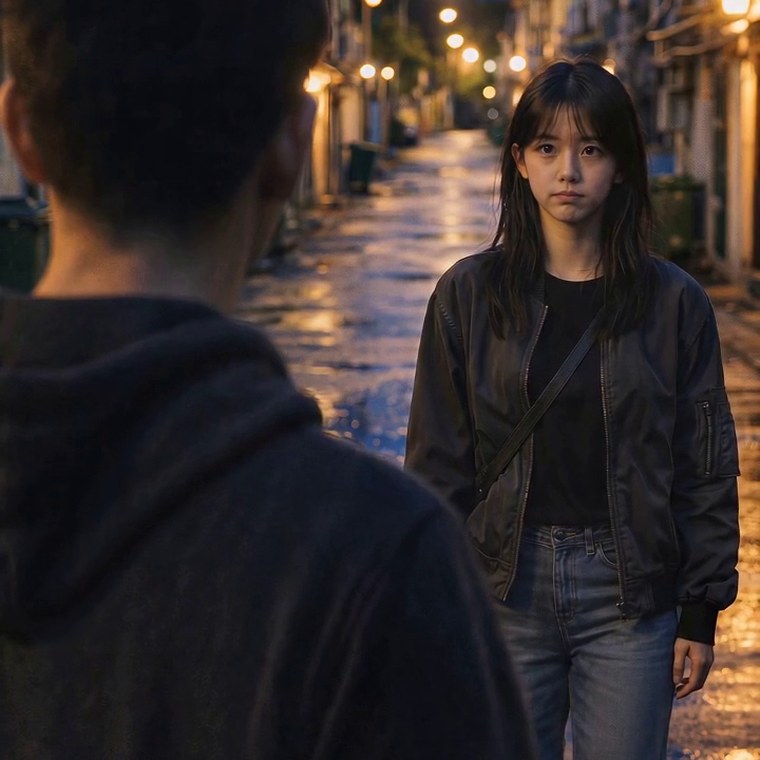
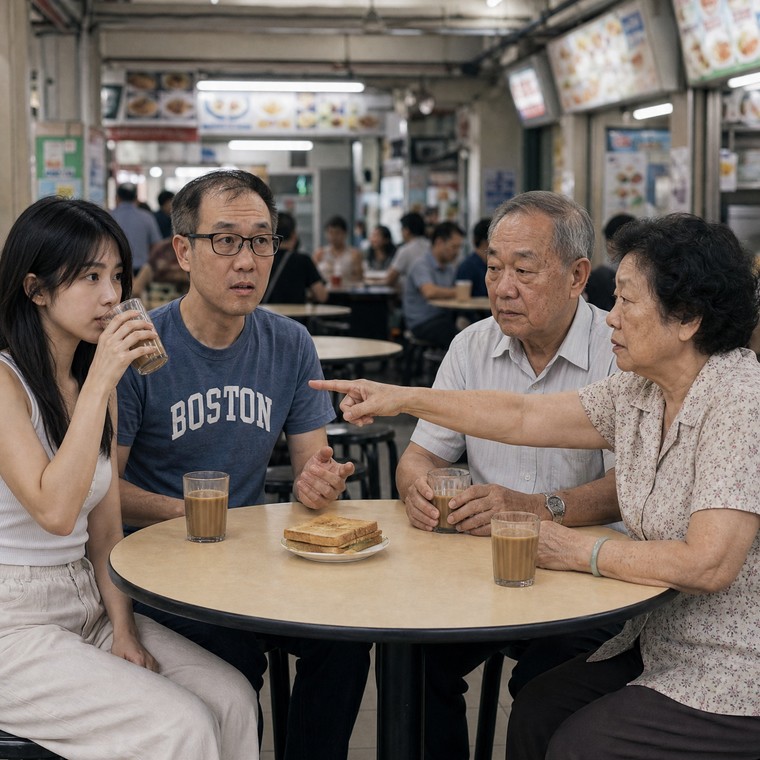
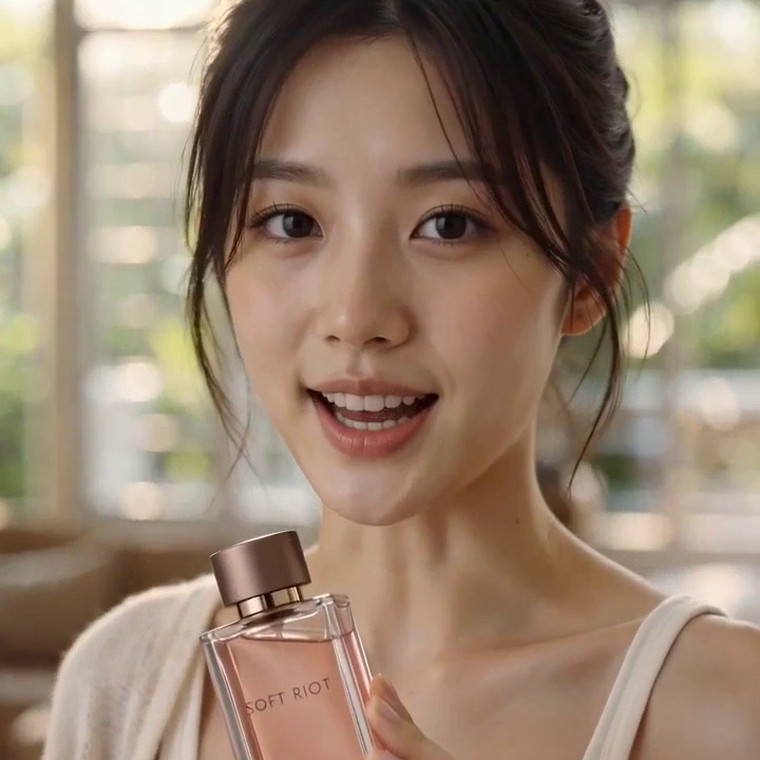
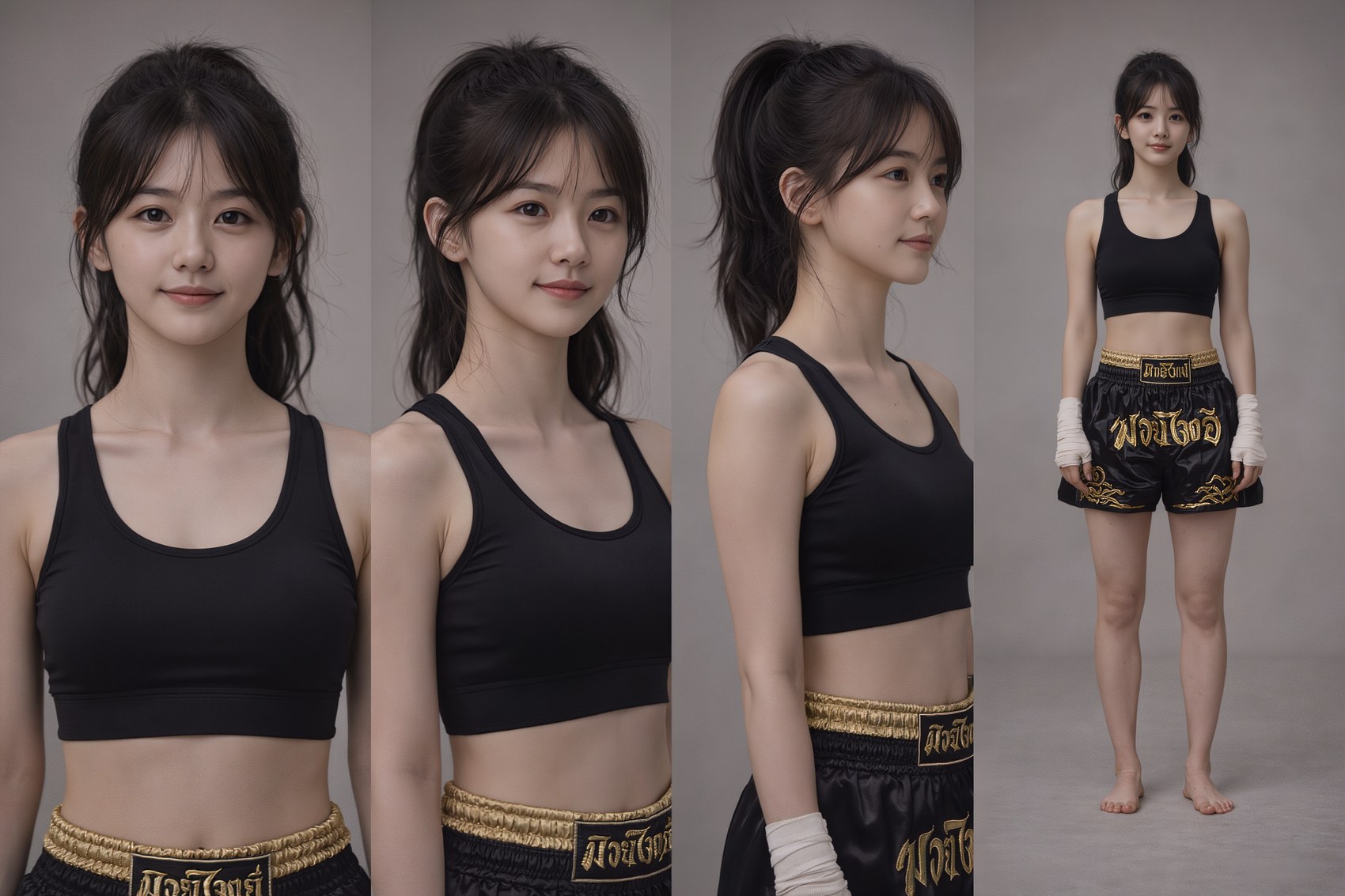
Claude does 90% of the production — the reference sheets, the script, the shots, the voice, the music, the edit, the posting. You do the ten percent that actually matters. This is the class where you stop clicking, and start directing.
The hard part of AI video was never the first shot.
It was the hundredth — with the same face.
Consistency is the wall every AI creator hits. Cross it, and you don't have clips any more. You have a production.
No inflated numbers, no rented audience — the account is brand new. What matters is that these are real posts on real platforms, and every frame of them came out of the pipeline you're about to learn. A comedy, a fight scene, a fragrance campaign — same character, same studio. Judge the work, not the follower count.
Justme Jasmin is an AI character created by Dr. Andrew Chew, and is openly labelled as AI on every platform.
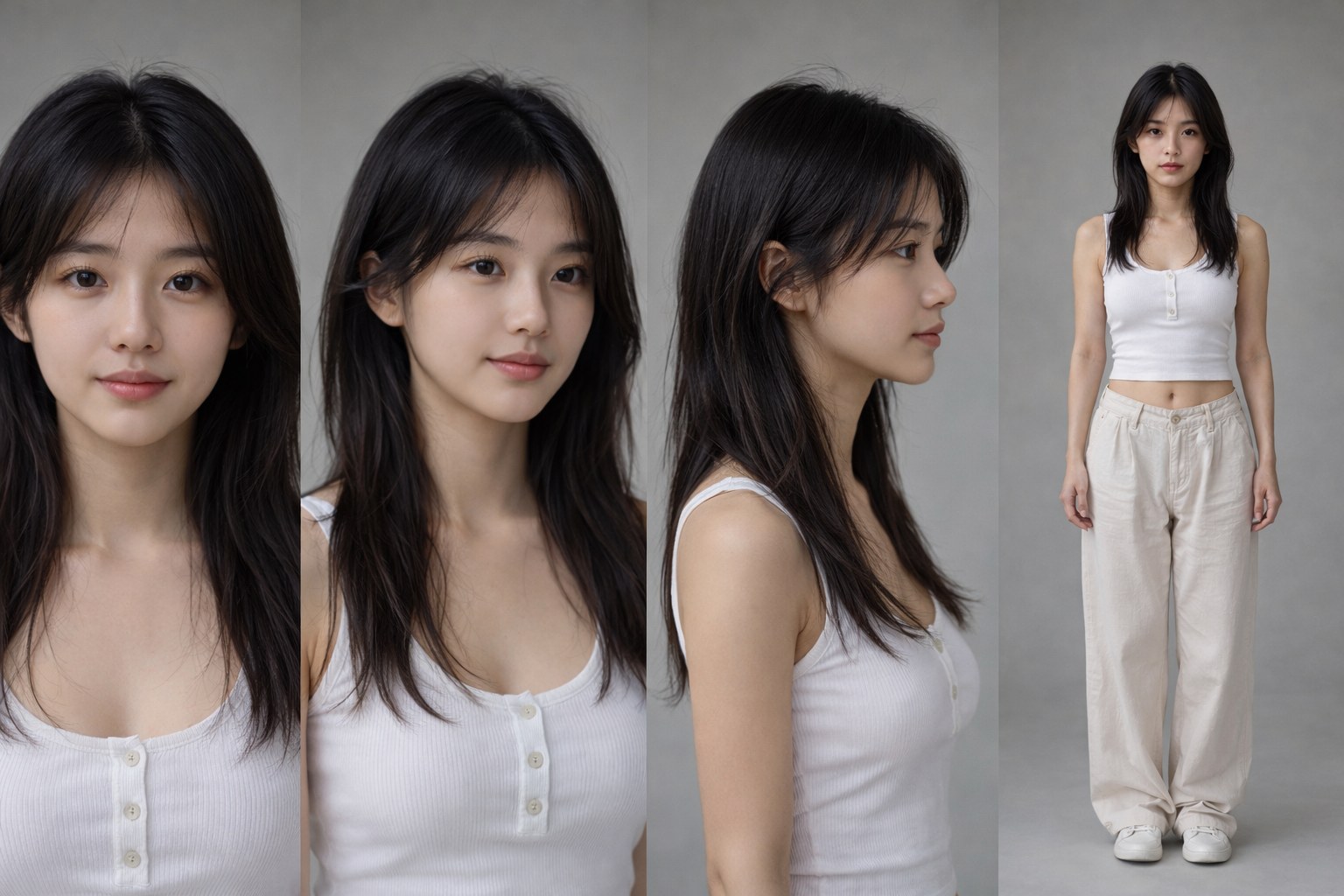
This single artefact is what separates a lucky render from a repeatable production. Build it once, and every future shot has something to obey. You will build yours in Hour 1.


Not the prompting. Not one step. The production. From the reference sheets that hold your character together, to the script, to every clip, to the voice, the music, the edit, the captions — and out the door to the platforms. Read that list again slowly. That is the whole job.
Claude interviews you, then generates the character sheet — five angles, one face — and the scene sheets that lock the world she lives in. Every asset gets logged and reused, so shot forty still looks like shot one. This is where consistency stops being luck and becomes a filing system.
It scores your idea out of twenty and tells you honestly when it's a twelve — then offers three better ones. It writes the beats, cuts every line to fifteen words, and builds the locked-world table that stops the model redecorating your kitchen between shots.
Stills first — cheap to iterate. Then each approved still becomes the first frame of its clip, generated on Seedance 2.0 — the newest and most powerful video model available today. Native audio, real performance, and the fidelity that makes people forget to ask whether it's AI. That first-frame anchor is precisely what stops your character morphing mid-reel. Claude fires the generations in parallel, polls them, retries the failures, and files everything where it belongs.
A cloned voice — hers, or yours — carrying the accent and the cadence, because get the voice wrong and the comments will roast you. Then an original Suno track scored to the mood of the cut. No library, no licensing, no copyright headache.
Crossfades, audio blends, burned-in captions positioned above the Instagram UI zone, exported to spec. You never open an editor. If the caption timing is off, you say so, and it re-renders in seconds.
Out to the platforms, AI-labelled — which is required, and also the best content angle you have. Forty-eight hours later it logs the views, the shares and the comments people actually quoted. Those quotes are next week's content.
So what's your ten percent? Taste.
Deciding who she is. Knowing which take is the one. Saying no at the gates. The machine will happily produce a hundred beautiful, forgettable reels — judgement is the part it can't do for you, and it's the part this class actually teaches.
You leave this class with a folder of files. Drop them anywhere, point Claude at them, and it reads the runbook, interviews you about your character, scaffolds your entire studio, and walks you to a finished reel. That folder is the course.
Automation without a handbrake is just a faster way to make rubbish. Nothing expensive gets generated until you've said yes.
Not a frame is generated until you approve the storyboard. Ideas are free. Video is not.
Every frame checked before it moves: does the face match the sheet? The room? Is the prop the right size?
Face, scene, realism, acting. All four, or it goes back. You don't ship "close enough" at 1am.
Live on Zoom with Dr. Andrew Chew. Hands-on from the first ten minutes — you build a character, shoot a reel, and finish with something you can actually post.
We're being straight with you: this course has real prerequisites, and they cost real money. You will be building alongside us — not watching a demo — so the accounts have to be live before you sit down.
The director. Claude drives the whole pipeline — writing prompts, running generations, assembling the cut. The Pro plan is what makes the tool connections possible.
The camera — and where you get Seedance 2.0, the newest and most powerful video model available today. Every frame you generate comes from here, and the credits are consumed live in class. One month is enough to finish the course and keep producing afterwards.
The score. We only touch it lightly, at the end — the free tier will comfortably cover everything you do in the session.
Yes — that's roughly US$40–50 in subscriptions before you even pay us. We'd rather say so on the poster than surprise you on the day. In exchange, you don't watch someone else make a film. You make one.
Andrew doesn't teach this pipeline from a slide deck. He runs it — Jasmin is his, built and posted on exactly the workflow you'll learn, and every awkward failure in this course is one he has personally hit and solved.
An award-winning trainer who turns fast-moving AI tools into skills people use the same week. No prior video, design or coding experience is assumed. Every session is live, step by step, and you finish having actually made something.
"I started with no prior knowledge, and by the end of just 3 hours, I was able to produce my own video."
"I've learnt using AI — Claude, Google Flow, Suno, CapCut. It was amazing. Mr Andrew is very helpful."
"Andrew is one of the best trainers I've ever had the privilege of learning from. He consistently goes above and beyond for every student."
"A jam-packed 3 hours online class. Another well done course by Dr Andrew."
"He's knowledgeable, eloquent, patient and approachable, and his classes are well-paced so no one gets left behind."
"One of the best trainers around."
"I started with no prior knowledge, and by the end of just 3 hours, I was able to produce my own video."
"I've learnt using AI — Claude, Google Flow, Suno, CapCut. It was amazing. Mr Andrew is very helpful."
"Andrew is one of the best trainers I've ever had the privilege of learning from. He consistently goes above and beyond for every student."
"A jam-packed 3 hours online class. Another well done course by Dr Andrew."
"He's knowledgeable, eloquent, patient and approachable, and his classes are well-paced so no one gets left behind."
"One of the best trainers around."
Live on Zoom, capped small so every screen gets looked at. Joining details land in your inbox the moment you book.
Three hours live with Dr. Andrew Chew, hands-on throughout, with follow-up support after class. Under S$60 an hour for a production pipeline you'll still be running next year. Your Claude Pro and Higgsfield subscriptions are separate — see what you need.
None. The whole point of an automated pipeline is that you describe what you want and the tools do the labour. If you can write a clear sentence, you can direct a scene.
No — this is v2.0, and it's a different course. The original teaches you to make a video by hand with Google Flow, Suno and CapCut. This one drops the manual tools entirely and teaches you to build a character and run an automated production pipeline with Claude and Higgsfield. If you've done the first one, this is the sequel. If you haven't, you don't need it.
The masterclass is S$180 per seat — three hours live with Dr. Andrew Chew, hands-on, with follow-up query support afterwards. Reserve through the Luma link for your chosen date and the Zoom joining details arrive by email straight away. Note that your Claude Pro and Higgsfield subscriptions are separate from the course fee.

Claude Pro (from US$20/mo) and Higgsfield (one month minimum — this is where your generation credits come from). Suno's free tier is enough. Both subscriptions can be cancelled after the month. We'd rather be blunt about this now than have you discover it on the day.
Yes. You build your character in Hour 1, generate a full sequence in Hour 2, and in Hour 3 Claude assembles and scores the cut. You leave with a finished piece — and, more importantly, with the pipeline that made it.
Not at all. A consistent character is just as useful for a product advertisement, a brand campaign, a corporate explainer or a short film. Jasmin is the demonstration, not the assignment.
Live on Zoom with Dr. Andrew Chew, hands-on throughout, with follow-up query support afterwards.

Three hours. One character who never breaks. A pipeline that keeps working long after the Zoom call ends.
More dates coming